The First Outing: Pick a Turnaround Point Before You Start
Choose a visible landmark, a simple way back and a route with room to shorten it. A little forethought makes a first outing easier to adjust on the move.
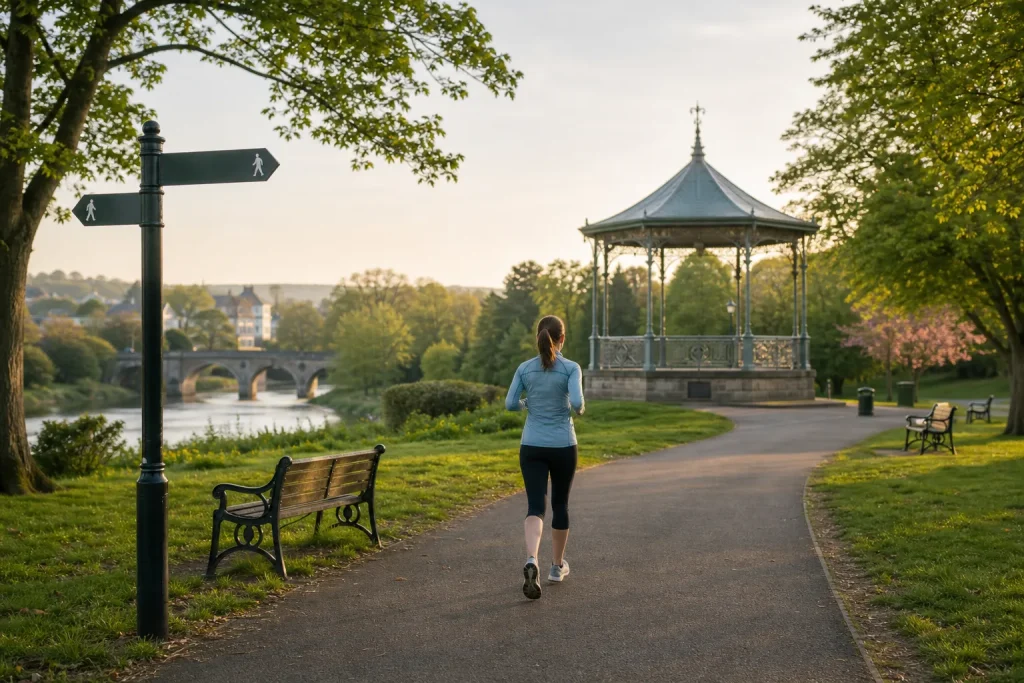
The common first-route mistake is to plan a loop that looks neat on a map but has no easy exit. If the outing feels longer than expected, you may be left trudging on simply because the route offers no obvious way back. Pick a clear turnaround point instead: you can reach it, pause, and return along ground you already know.
Choose a visible marker
Look for a landmark that is easy to recognise from the path: a footbridge, a bandstand, a distinctive playground entrance or the gate to a park. A café can work too, provided you can see it from your route and do not need to cross a busy road to reach it.
Keep the marker simple. A bend with several similar paths or a tree that looks much like every other tree is a poor cue when you are catching your breath. Check the route on a map app before leaving, then use the landmark as your decision point rather than as a promise you must fulfil.
Make the return obvious
For an early outing, an out-and-back route is often easier to adjust than a loop. You travel along one path, turn around at your marker, and retrace your steps. That makes the return leg familiar, and it avoids the awkward discovery that a tempting shortcut is private, muddy or closed.
Choose a path with a clear surface and a straightforward crossing plan. A park path, riverside promenade or quiet residential pavement may suit; the best choice depends on what is accessible and familiar near you. If the route includes a road crossing, decide where you will cross before setting off, and use the proper crossing point rather than cutting across traffic.
Leave room to shorten it
Your marker should be an option, not a test. Choose a nearer landmark as well as your intended one: perhaps the park entrance first, then the footbridge farther along. If you feel ready, continue towards the second; if not, turn back at the first without needing to invent a new route.
Also notice places where you can safely stop or change direction. A bench, a staffed café or a well-used path junction can help you pause and make a calm choice. Avoid relying on a narrow verge, an isolated track or a shortcut across uneven ground as your fallback.
Check the route itself
Look beyond the line on the map. Parks may have gates that close, paths may be shared with cyclists, and riverside routes can have muddy or slippery sections after rain. A local council map or park noticeboard can clarify access; if something is unclear, choose a more familiar public path.
Pay attention to the time of day and the light. A route that is easy to follow in daylight may be harder to read after dusk, especially where paths are unlit or signs are sparse. Pick a route where you can see your surroundings and get back without depending on a dim shortcut.
If you are returning after a long break, or have a health concern that could affect exercise, get suitable advice from a qualified health professional before starting. For route safety, tell someone where you plan to go if that feels appropriate, and carry a phone if you can do so comfortably.
Try a flexible outing
Say you are starting at the entrance to a familiar neighbourhood park. You choose the bandstand as the main marker and the first bench as the nearer option, checking that both sit on the same broad path. If you reach the bench and would rather head home, you turn around there; if you feel comfortable continuing, the bandstand gives you a clear point to aim for before retracing your route.
The useful part is not how far you get. It is having a route with more than one sensible choice, so the outing can match how you feel that day. Before you leave, make sure the way back is as clear as the way out; that small decision can make it easier to head out again.
Keep the plan light
There is no need to map every turn or fill your phone with route notes. Remember the start, the marker, the nearer fallback and the crossing you intend to use. A quick look at the map is enough to confirm that the path connects as expected.
Once you are out, treat the plan as a guide. If a path is blocked, the weather turns or the surroundings feel uncomfortable, turn back or choose a public route you recognise. A good first outing ends with a clear way home and the option to try again on another day.
Keep the thread going
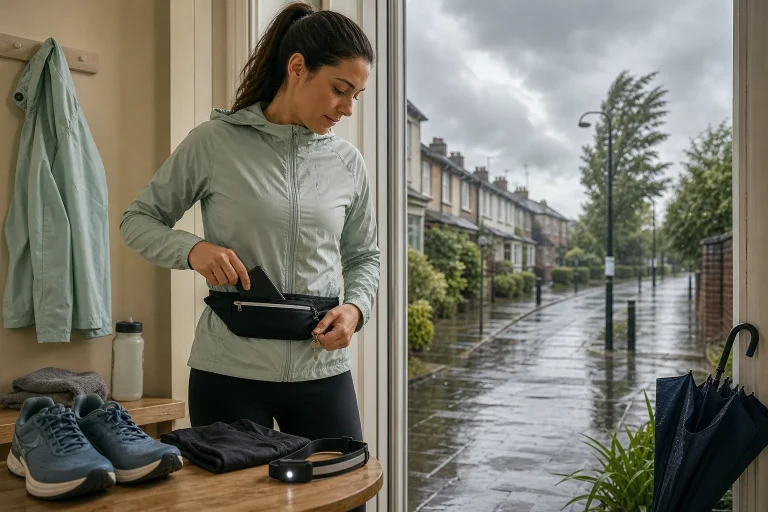
Before You Head Out: A First-Run Pocket Check
A small check before you leave can prevent a chilly, awkward or cut-short first run. Review…

The Week That Got Away: Returning Without a Catch-Up Run
A missed week does not leave a debt to repay. Choose one manageable next run, give…