Before You Head Out: A First-Run Pocket Check
A small check before you leave can prevent a chilly, awkward or cut-short first run. Review the weather, dress for moving, carry only useful essentials and decide how you will change course if needed.
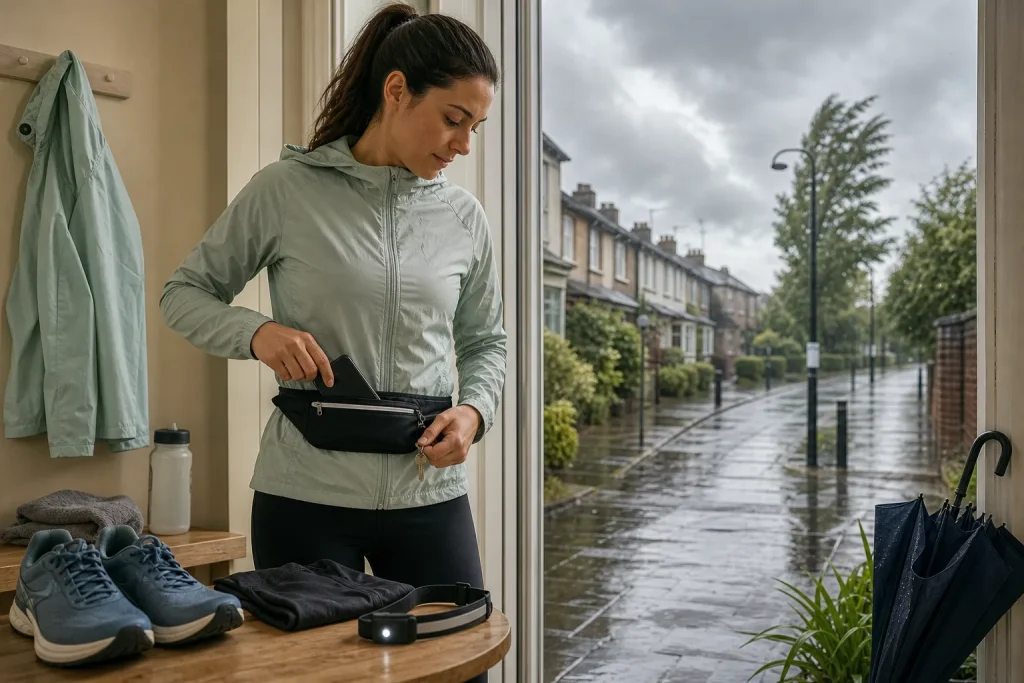
The most common first-run mistake is treating the front door as the last decision point. You step outside in whatever you wore to walk the dog, leave your phone behind, and discover halfway down the street that the wind, a loose pocket or an unexpected shower has changed the outing. A brief check costs little time; skipping it can make a manageable run feel needlessly uncomfortable or leave you without an easy way to adjust.
This is not a packing ritual or a promise that every run will go smoothly. It is a quick way to notice what the day asks of you, take only what helps, and keep a simple option open if the plan stops fitting. With practice, the check becomes a glance at the sky, a tug at a pocket and a clear idea of when to turn back or stop.
Read the conditions
Look at the weather for the time you expect to be outside, not just the view from the window. A grey morning may stay dry; bright sunshine can still feel cold in a shaded street. Check for rain, wind, temperature changes and any local warning that could make being outdoors unwise.
Think about how those conditions will meet your route. Wind can feel sharper on an open path than between buildings, while a shower may leave park paths muddy or slippery. If thunder, ice, flooding or another hazard is likely, choose a safer alternative or postpone the run rather than trying to dress your way around it.
For ordinary damp weather, a light jacket that sheds rain may be more useful than a thick coat that traps heat. In warm sun, choose breathable clothing and consider a route with shade. The aim is not to predict every change, but to spot the obvious one that could affect comfort or safety.
Dress for movement
Start with clothing that lets your arms and legs move freely and does not need constant adjustment. A cotton top can feel clammy once damp; a simple synthetic running shirt or another quick-drying layer may stay more comfortable. You do not need specialist kit to begin, but clothes that rub, flap or slide out of place can quickly become distracting.
Dress for the effort rather than standing still at the door. You may feel cool before you start moving, so a heavy layer can become too warm once you settle into an easy pace. If the air is chilly, a thin layer that you can tie around your waist or remove and carry may be more practical than a bulky jumper.
Check the small contact points: socks should sit smoothly, waistbands should stay put, and laces should feel secure without pinching. If a seam or fastener already bothers you while walking around the room, it is unlikely to become less noticeable outside. A quick adjustment at home is easier than stopping repeatedly to fix it.
Carry only useful things
For a short outing near familiar streets, a phone may be the most useful item to take. It gives you a way to contact someone or change your plans if you need to, but it should be carried securely rather than gripped in your hand. A zipped pocket, a comfortable running belt or an armband can work; choose the option that stays steady when you move.
Take a key if you will need one to get back inside, and make sure it cannot jab you or bounce around. If you use a public transport card, access pass or another item to get home, bring it only if your route makes it relevant. A small tissue can be handy, but there is no need to fill every pocket with supplies for a short, local run.
Water depends on the conditions, the route and what feels comfortable for you. You might run near a place where you can stop for a drink, or prefer to carry a small bottle; either choice is reasonable. If you have a health condition or personal guidance that affects hydration, follow advice from a qualified professional rather than relying on a general rule.
Make sure you can hear and notice what is around you. If you choose headphones, keep the volume low enough to hear traffic, cyclists and other people, or leave them at home. Reflective details or a light can help you be seen in dim conditions, but they do not replace choosing a route and time that feel safe.
Keep an exit option
Before leaving, decide what you will do if the outing feels wrong. That could mean walking home, cutting a loop short, stopping under shelter or contacting someone. You do not need a complicated backup plan; you need an option you can remember without negotiating with yourself while tired or uncomfortable.
Check that your phone has enough charge for the outing and that you know how to reach the person you might call. If you are running somewhere unfamiliar, tell someone the general area and when you expect to be back. Keep your route simple enough that changing direction does not turn into a new problem.
Imagine you are heading out on a breezy, showery afternoon in a neighbourhood you know. You check the forecast, swap a thick sweatshirt for a light layer, put your phone and house key in a zipped belt, and choose streets with covered doorways and familiar crossings. If rain becomes unpleasant or you feel unwell, you can walk home or call for help; the useful result is a clear choice, not a requirement to finish the planned run.
Pay attention to your body as well as the sky. If you feel faint, unusually short of breath, unwell or in pain that concerns you, stop and seek appropriate help rather than trying to push through. For recurring symptoms or questions about exercise and an existing health condition, ask a qualified health professional for advice tailored to you.
Make the check yours
A pocket check works best when it stays brief and personal. One runner may need to check a hearing aid, another may carry an inhaler prescribed for them, and someone else may simply need to make sure their front-door key is in the right pocket. Keep any medically necessary item accessible and follow the instructions given by your clinician.
Notice what actually causes friction after each outing: a phone that bounces, a jacket that is too warm, or a key that scratches your leg. Change that one detail next time instead of adding more gear by default. The point is to make leaving the house feel straightforward, not to turn a short run into an expedition.
Just before you go, pause long enough to check the conditions, your layers, your essentials and your way to change or end the outing. Then head out with room to adapt. That small pause is most useful when it gives you permission to make a sensible adjustment, including deciding that today is better suited to a walk or a rest.
Keep the thread going

The Week That Got Away: Returning Without a Catch-Up Run
A missed week does not leave a debt to repay. Choose one manageable next run, give…
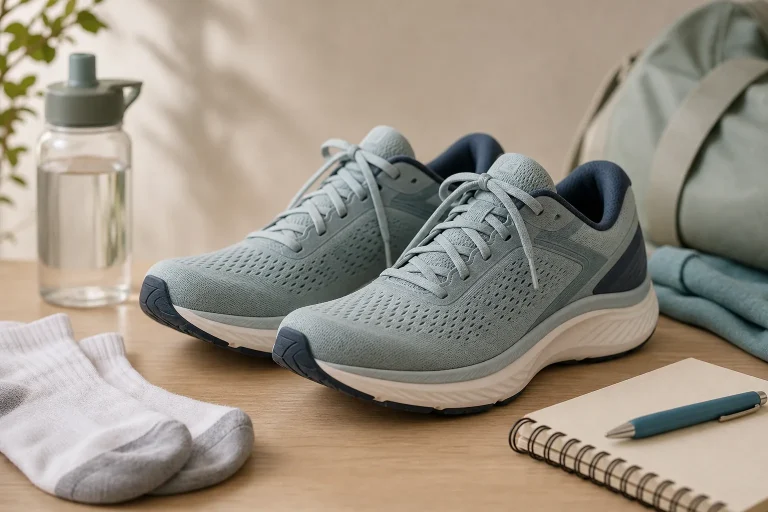
Shoes at the Door: What to Notice Before Your First Run
A comfortable running shoe is the one that suits your foot and the way you plan…