Shoes at the Door: What to Notice Before Your First Run
A comfortable running shoe is the one that suits your foot and the way you plan to run. Here’s what to check in the shop, at home and during a gentle first outing.
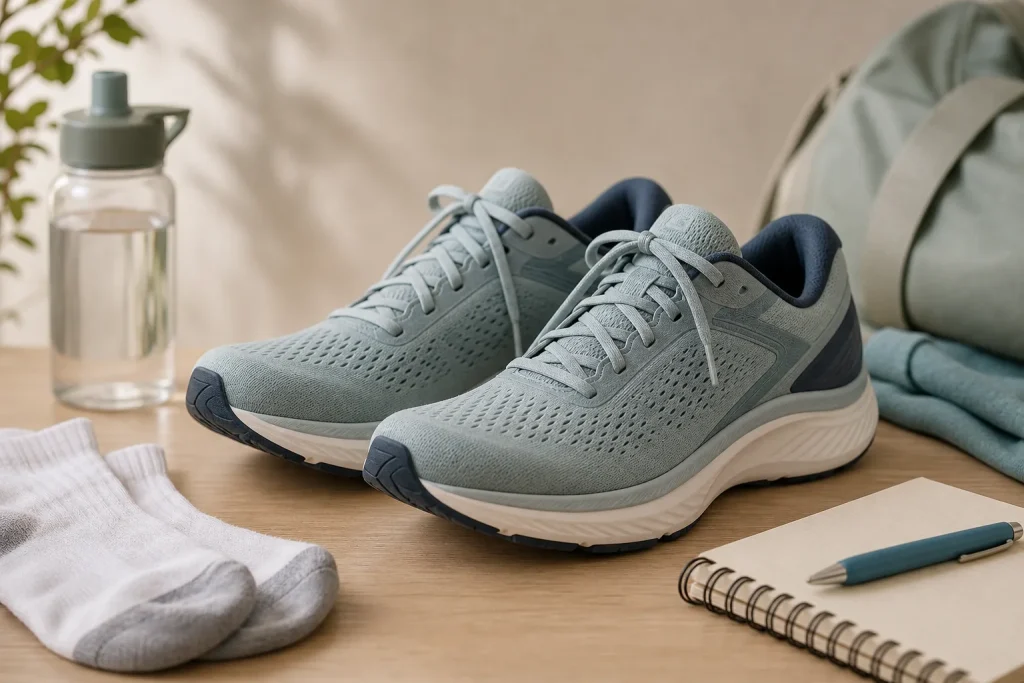
The common mistake is choosing running shoes by appearance or by a friend’s recommendation, then discovering that a rubbing heel or cramped toe turns a short outing into an uncomfortable one. A shoe that feels promising on the shelf still needs to suit your feet, socks and intended use.
You do not need a particular model, a technical vocabulary or a dramatic sense of spring. Start with fit and comfort, then consider where you will run and how the shoe behaves when you move.
What should a good fit feel like?
Your toes should have room to spread and move, while the shoe holds your foot securely without pinching. The front should not press against your toes, and the heel should feel stable rather than sliding with each step.
Try shoes on with the socks you expect to run in. Feet can feel different after a day on them, so if possible, shop when they are not at their freshest. Stand up, walk around and check both shoes; one foot may need more room than the other.
Notice pressure across the top and sides of your foot, as well as the shape of the toe box. A shoe can be the right length but still feel too narrow or awkwardly shaped. Lacing changes may ease a small pressure point, but they should not be used to disguise a basic mismatch.
How much room is enough?
There should be a little breathing room in front of your longest toe, without your foot shifting forwards or sideways. Do not rely on a rigid rule about how much space you need: foot shape, sock thickness and the shoe’s design all affect the feel.
Walk briskly and try a few gentle jogging steps if the shop allows it. Your toes should not bang into the front, and your foot should not swim inside the shoe. If you feel compelled to curl your toes to keep the shoe on, try another fit or a different lacing arrangement.
Should the shoe feel soft?
Comfort matters more than a particular sensation of softness. Some runners like a cushioned feel underfoot; others prefer a firmer, more direct response. Neither sensation is automatically better for a beginner.
Pay attention to whether the shoe feels comfortable across the whole foot, not just pleasant under the heel. A very soft landing can still come with a tight upper or an unstable-feeling fit. Conversely, a firmer shoe may feel unfamiliar at first without being uncomfortable. Choose the pair that lets you move naturally, not the one with the most dramatic first impression.
Do I need running-specific shoes?
If you expect to run regularly, a pair designed for running is a sensible place to start. These shoes are made for repeated running movement, but that does not mean every running shoe suits every foot or every surface.
For a first pair, a straightforward road-running shoe may suit pavements and smooth paths. If your usual route is uneven, muddy or rocky, look for a design intended for those conditions; its grip and construction may feel different underfoot. Tell the shop staff where you expect to run and ask to compare suitable options, rather than being steered towards a model simply because it is popular.
There is no need to buy separate shoes for every kind of outing before you know what you enjoy. Start with the surfaces you are most likely to use, and choose a shoe that feels at ease there.
What should I check in the shop?
Ask to try more than one size or shape if the first pair feels close but not quite right. A brief walk and a few jogging steps can reveal heel movement or rubbing that is easy to miss while sitting.
- Toe room: Can you move your toes without touching the front?
- Width: Does the shoe press on the sides or let your foot slide around?
- Heel hold: Does your heel stay comfortably in place as you walk?
- Upper comfort: Do seams, overlays or laces create a sharp pressure point?
- Underfoot feel: Does the sole feel comfortable and steady as you move?
- Intended surface: Does the design make sense for the pavement, path or trail you expect to use?
- Sock compatibility: Does the fit still feel right with your usual running socks?
If a pair causes pain, numbness or persistent rubbing during a short try-on, do not assume it will sort itself out once you are running. Ask about another fit, and speak with a qualified clinician if you have ongoing foot pain or a medical concern.
Can I run in my old trainers?
Possibly, if they feel comfortable and secure, but everyday trainers are not automatically a good running fit. Check the same things you would check in a new pair: toe room, heel hold, pressure points and comfort while moving.
Look at the sole and upper for obvious damage, such as a split, a loose section or worn areas that affect your footing. Appearance alone cannot tell you how a shoe will feel on a run, so do not decide by age or a sales label. If the shoes pinch, slip or feel uncomfortable on a walk, they are unlikely to become a better choice once you start jogging.
How should I try them at home?
Keep the shoes clean and follow the shop’s return conditions before taking them outdoors. At home, wear them with your running socks, walk around and pay attention to how your feet feel after standing and moving for a while.
Imagine you have bought a pair that feels roomy in the shop but begins to rub at the heel while you walk round the kitchen. Loosening the laces slightly might reduce pressure across the top, but if the heel still slips, the useful result is clear: try a different fit before taking them out for a run. Small comfort problems are easier to address before a longer outing.
What matters most in the end?
Choose for your own foot, not for a friend’s preference or a promise on the box. A secure heel, unpinched toes and a comfortable feel across the foot are more useful starting points than a particular brand, look or amount of cushioning.
Once you have a pair that feels right indoors, keep the first run simple and notice how the shoes feel as you move. If discomfort persists, stop and reconsider the fit rather than trying to run through it. The best choice is the one that lets you pay attention to the run instead of your feet.
Keep the thread going
Before You Head Out: A First-Run Pocket Check
A small check before you leave can prevent a chilly, awkward or cut-short first run. Review…

The Week That Got Away: Returning Without a Catch-Up Run
A missed week does not leave a debt to repay. Choose one manageable next run, give…