Effort You Can Speak Through: Finding an Unhurried Pace
A made-up first run shows how a spoken sentence can help you ease off before an easy outing turns into a race against the clock.
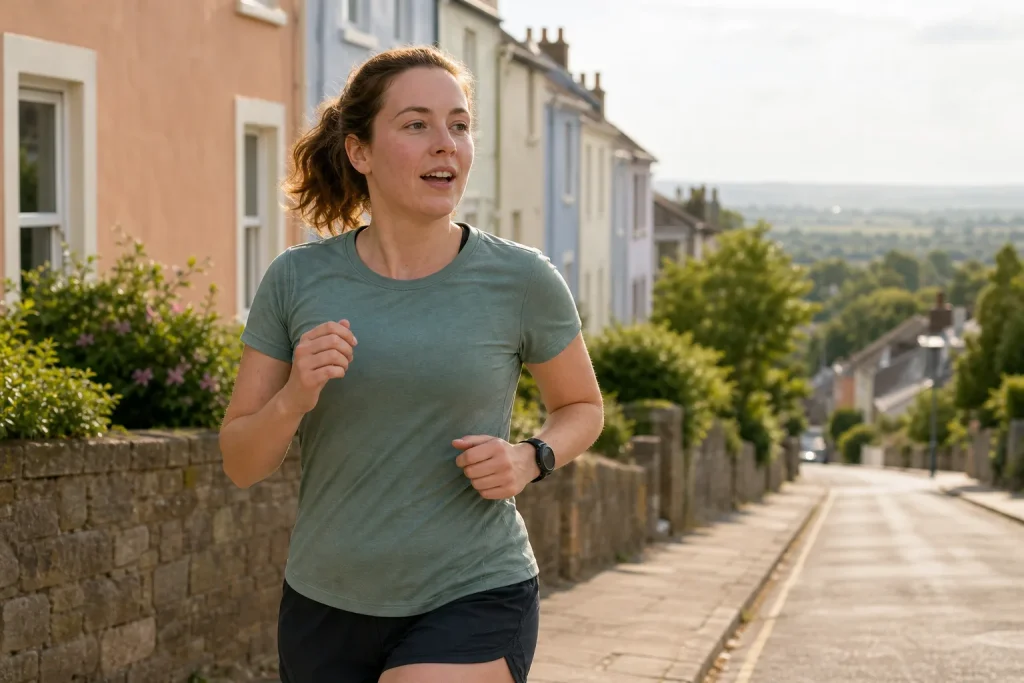
The common mistake is treating an easy run as a slow race: the watch is running, so the pace must be improved. The cost is an outing that feels far harder than intended, leaving a beginner unsure whether running itself is the problem. A simple spoken sentence offers a better cue: if ordinary conversation feels strained, ease off.
Say you are returning to running after a long break. Imagine you set out from your front door on a mild afternoon, hoping to run for a while without needing to stop. You have a phone with a basic timer, but no pace target. The aim is not to prove fitness; it is to keep the effort comfortable enough that you could say a full sentence aloud.
The opening temptation
In this invented situation, the first few minutes feel pleasantly light. The pavement is familiar, your legs feel willing, and a glimpse at the phone shows that you are moving faster than expected. That small surprise can turn into a challenge: hold this pace, or perhaps go a little quicker.
Instead, you test the effort with a natural sentence: “I could keep going at this pace and still talk comfortably.” It comes out in a rush, with a breath grabbed halfway through. That is useful information, not a verdict. You shorten your stride, let your arms swing loosely and ease the effort until the words come out without being pushed.
The adjustment may feel almost too gentle. That is precisely why the cue helps: it interrupts the urge to turn the first minutes into a performance. You are not trying to hit a particular speed. You are checking whether the current effort fits the purpose of an easy outing.
What conversation means
“Conversational” does not mean chatting continuously or reciting a speech while running. Try a short, ordinary sentence that you would actually say to a companion. The useful question is whether you can speak it in a relaxed voice, rather than squeeze out a few words before gasping for air.
Different people may need different wording. You might say, “The path is quiet today,” or, “I’m heading back past the trees.” What matters is that the sentence feels natural and that you can finish it without your breathing taking over. A brief test is a cue, not a medical measure or a precise gauge of effort.
There is no need to repeat the same sentence on a strict schedule. Check in when the effort changes: after a hill, when the path opens up, or when you notice yourself chasing the watch. Over-checking can make a run feel like an exam. A few relaxed moments of attention are usually more useful than constant self-monitoring.
Let the route speak
Back in the hypothetical run, the route begins on a flat pavement, then rises gently beside a row of houses. The runner’s pace slows on the slope, but breathing still feels controlled. The watch might call that slower; the body is doing sensible work for the terrain.
This is where the talk cue prevents a common misunderstanding. An easy effort does not require identical speed on every surface. On an incline, shorten your stride and let your pace drop. If your sentence becomes choppy, ease further or walk briefly. On a downhill, resist the temptation to charge simply because the ground is helping you along.
Wind, heat, a heavy bag and a restless day can all change how a familiar pace feels. Rather than trying to preserve a number, respond to the effort in front of you. The same route can call for a different speed on another afternoon, and that does not make the run a failure.
Walking can belong
As the invented runner reaches the rise, speaking comfortably becomes harder even after easing back. A short walking break is a reasonable next choice. They walk until breathing settles, then try running again at a gentler effort. The observable result is simple: the next sentence comes more easily, and the outing continues without a contest against the hill.
A walk break does not cancel the run. It gives you another way to keep the effort easy, especially when you are new to running or returning after time away. You can also alternate planned stretches of running and walking, rather than waiting until you feel overwhelmed to stop.
If slowing down or walking does not make the effort comfortable, end the running portion and head home at an easy walk. Ordinary breathlessness from exertion is different from worrying symptoms such as chest pain, faintness or unusual difficulty breathing. Stop if these arise and seek appropriate medical advice; anyone with health concerns can ask a qualified professional for guidance before running.
What the watch can do
In this scene, the phone’s timer stays available but no longer decides the pace. The runner turns off spoken pace alerts and checks the screen only at the end. That small choice removes a prompt to speed up whenever a number looks slower than hoped.
A watch can still be useful for recording a route or noticing how an outing felt over time. But instant pace is only one piece of information, and its display can jump around with turns, trees or a brief pause. If it pulls your attention towards comparison, hide that screen or leave the device at home for a short, familiar outing.
Instead of judging the run by its pace, make a quick note afterwards: “Comfortable on the flat; walked the rise; finished feeling settled.” That description is specific enough to guide your next outing without turning the watch into a scorecard. If you prefer not to keep notes, simply remember what helped.
A useful reset
Imagine that halfway home, the runner notices a familiar urge to speed up. They choose a simple reset: loosen the shoulders, let the hands rest, shorten the stride and say one sentence aloud. The words come out hurried, so they back off again. A little later, conversation feels comfortable, and they carry on at that effort.
That sequence is worth borrowing: notice the urge, soften the body, check the sentence and adjust. It is not a rigid formula, and it does not need to happen every few minutes. It is a practical way to return attention to effort when the clock, a passing runner or a fast patch of ground starts setting the agenda.
There may be stretches where talking aloud feels awkward, particularly on a busy pavement. You can use the test quietly, mouthing a few words or saying them under your breath. You can also check whether breathing remains steady enough for relaxed speech, then confirm with a sentence when you have space.
The finish that fits
In this hypothetical outing, the runner reaches the front door having run the flatter parts gently and walked the rise. They have not chased the pace shown on the phone. The useful result is that the effort stayed manageable, and the runner can describe what happened without needing to call the outing a triumph or a failure.
For a next run, they might repeat a similar easy effort, take the same gentle route or choose an equally familiar one. There is no need to make the outing longer or faster simply because this one went smoothly. Let comfort and recovery help shape the next choice, and change only what seems sensible.
Keep the spoken cue flexible: a sentence that works on a flat path may not fit a hill, and a day when you feel tired may call for a slower pace or more walking. The most useful question is not “How fast should I be?” but “Can I keep this effort comfortable?” When the answer changes, ease off. That small adjustment can keep an easy run from becoming a race against the clock.
Keep the thread going
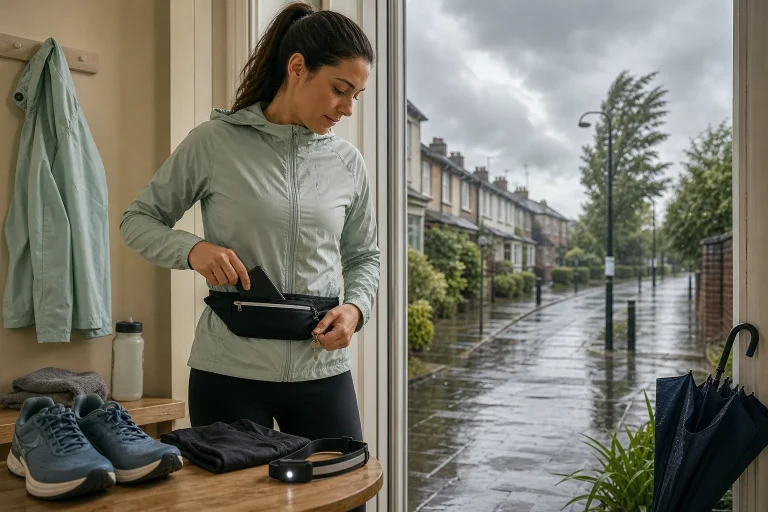
Before You Head Out: A First-Run Pocket Check
A small check before you leave can prevent a chilly, awkward or cut-short first run. Review…

The Week That Got Away: Returning Without a Catch-Up Run
A missed week does not leave a debt to repay. Choose one manageable next run, give…